 Femurize
Active Recall and Spaced Repetition for Anatomy
Why testing yourself beats rereading, what the research shows, and a simple daily routine for learning anatomy with active recall and spaced repetition.
By Femurize · · 6 min read
In this article
Anatomy asks you to hold thousands of names in memory and pull out the right one when you look at a structure. Most students prepare by reading, highlighting and reading again. It feels productive, and it is one of the least effective ways to study. Two techniques, active recall and spaced repetition, have decades of research behind them and fit anatomy almost perfectly. This guide explains what they are, what the studies found, and how to build them into a short daily routine.
What active recall is
Active recall, also called retrieval practice, means trying to produce an answer from memory before you see it. Covering the labels on a diagram and naming each structure is active recall. Rereading the labelled diagram is not.
The difference sounds small, but it changes what your brain practices. Rereading trains recognition: you see the name and it feels familiar. An exam, and later a clinic, asks for retrieval: you see the structure and must come up with the name. Active recall practices the task you will actually be tested on.
What the research shows
Testing beats restudying, after a delay
In a well-known experiment published in 2006, Henry Roediger and Jeffrey Karpicke had students learn short prose passages. Some students spent their time rereading the passage; others read it once and then spent the rest of the time trying to recall it on blank paper. When they were tested five minutes later, the rereading group did slightly better. When they were tested a week later, the recall group remembered clearly more.
Two details from that study matter for you. First, the benefit of testing showed up after a delay, which is exactly the situation of an exam weeks away. Second, the students who reread expected to do better than they did. Rereading feels like learning, and that feeling is misleading.
Recall beats more elaborate study methods too
A 2011 study in Science by Karpicke and Janell Blunt compared retrieval practice with concept mapping, a technique that asks students to draw the relationships between ideas. Retrieval practice produced more learning a week later, even on questions that asked students to draw a concept map. Trying to recall the material was more useful than spending the same time organizing it.
It has been tested in medical education
Douglas Larsen, Andrew Butler and Roediger reviewed this research for medical educators in 2008. Their conclusion was that repeated testing is a practical way to improve long-term retention in medical training, and that tests should be used as a learning tool, not only as a way to grade.
Spacing makes recall stick
Spaced repetition means returning to the same material over increasing gaps instead of cramming it in one block. A large 2006 review by Nicholas Cepeda and colleagues pooled hundreds of comparisons and found that spreading practice out produced better long-term recall than massing it together.
A follow-up study in 2008 looked at how long the gaps should be. The best gap depended on when the test was: the further away the test, the longer the best gap, although it grew more slowly than the test delay itself. The practical message is simple: review soon after learning, then again after longer and longer gaps.
A review of ten study techniques
In 2013, John Dunlosky and colleagues reviewed ten common study techniques and rated how useful each one was, based on the research available. Practice testing and distributed practice (spacing) were the only two rated as highly useful. Highlighting and rereading were rated as low utility. If you only change one habit, change the one that turns reading into testing.
Why anatomy is a perfect fit
Some subjects are hard to turn into recall questions. Anatomy is the opposite. Almost every fact has a natural question: what is this structure? That makes it easy to build recall into every session.
Anatomy also has a problem that spacing solves. Names are learned in clusters (the bones of the skull, the carpal bones, the branches of the aortic arch), and clusters learned in one evening fade quickly. Spacing brings each name back right before you would have forgotten it.
Finally, anatomy is three-dimensional. Real exams show a structure from an angle you have not seen. Recall practice works best when the question looks like the test, so practising on models you can rotate, not only on one textbook drawing, is worth the effort.
A simple daily routine
You do not need a complex system. This routine takes 15 to 30 minutes a day and works alongside lectures and dissection.
- Learn a small set. Pick 8 to 15 related structures, such as the cranial bones. Read about them once, with a model or atlas open. Use a mnemonic if a list is long; our skull bones guide has two.
- Test yourself the same day. Cover the labels and name each structure. Check each answer right away and fix mistakes while they are fresh.
- Bring back what you missed. Anything you got wrong goes into tomorrow's review. Anything you got right comes back after a longer gap.
- Review on a growing schedule. A simple version: the next day, three days later, a week later, then a few weeks later. Each successful recall earns a longer gap.
- Mix, then go deeper. Once a cluster is solid, mix it with older ones. Then add the next layer: foramina, articulations, what passes where.
Make your recall honest
A few rules keep recall practice from turning back into reading:
- Produce the answer before you check. Type it, say it out loud, or write it. A vague sense of knowing does not count.
- Spell it out. Exams and clinical notes need the right name, not something close. Typing the name forces you to get it right.
- Rotate the view. Name the same structure from the front, side and below.
- Track your weak spots. The structures you miss most are where your next session should start.
Common mistakes
- Only reviewing what feels hard. Easy items fade too. Spacing handles this: easy items return less often, but they still return.
- Waiting until you feel ready to test yourself. Testing early is part of learning, not a final check. Getting an answer wrong and then seeing the right one helps you remember it.
- Making cards that are too big. One structure, one question. A card that asks for five things at once is hard to grade honestly.
- Cramming the night before. It can get you through tomorrow, but the names will not be there for the next block, the boards or the ward.
How Femurize uses these ideas
We built Femurize around this research. Each lesson is a short recall loop on a real 3D model: one structure lights up and you type its name. The first pass shows the name so you can learn it, then the lesson asks again from memory. Wrong letters show at once, so you fix a misspelling before it sets in. What you miss comes back on day 1, 3 and 7, and what you know comes back less often.
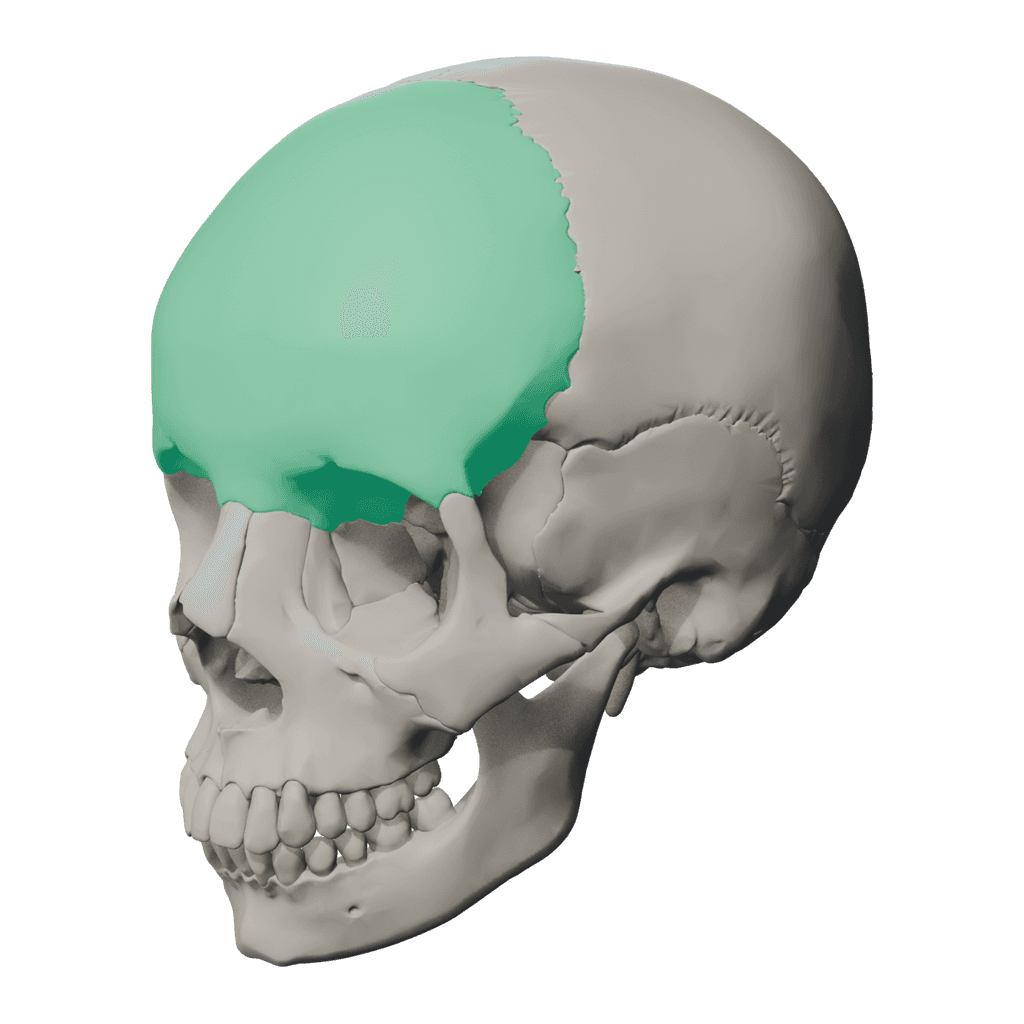
You can try it for free with the skull: the cranial vault lesson is free and takes about four minutes; the face and a shuffled review come next with Pro. For a deeper look at a single bone, see the sphenoid bone guide or the facial bones guide.
Key takeaways
- Rereading feels productive but mainly builds familiarity. Recall builds the memory you need on exam day.
- Testing yourself beats restudying after a delay, and spacing your reviews keeps names for longer.
- Anatomy is ideal for both: every structure is a question, and spacing fights the fast fading of long lists.
- Keep sessions short, check every answer, and let mistakes come back sooner.
Sources
- Test-Enhanced Learning: Taking Memory Tests Improves Long-Term Retention (Roediger & Karpicke, 2006) · Psychological Science
- Retrieval Practice Produces More Learning than Elaborative Studying with Concept Mapping (Karpicke & Blunt, 2011) · Science
- Test-enhanced learning in medical education (Larsen, Butler & Roediger, 2008) · Medical Education
- Distributed practice in verbal recall tasks: A review and quantitative synthesis (Cepeda et al., 2006) · Psychological Bulletin
- Spacing Effects in Learning: A Temporal Ridgeline of Optimal Retention (Cepeda et al., 2008) · Psychological Science
- Improving Students' Learning With Effective Learning Techniques (Dunlosky et al., 2013) · Psychological Science in the Public Interest
Written and reviewed by the Femurize team for study purposes. It is not medical advice.